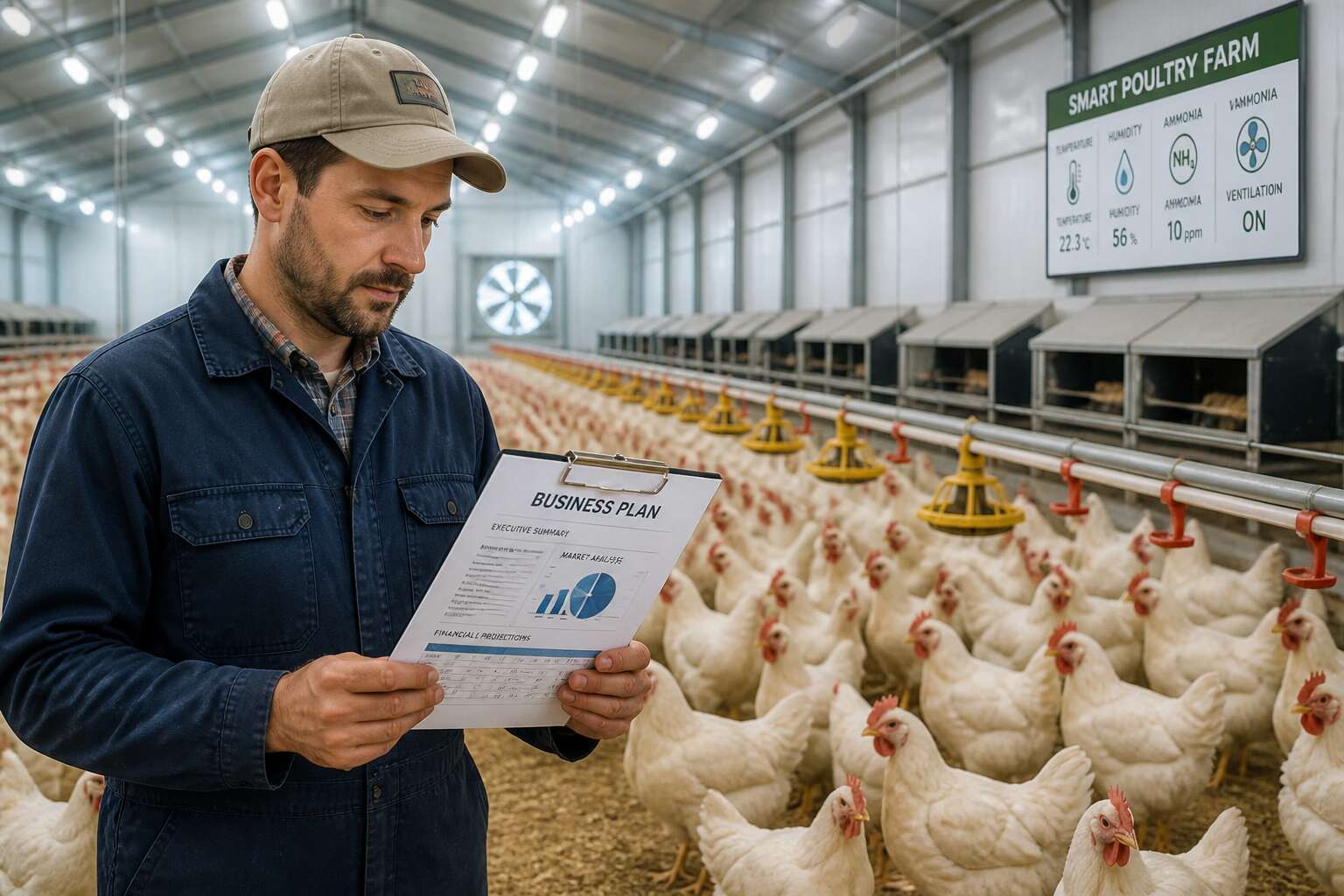
Market Research and Feasibility Analysis
Understanding Current Poultry Market Demand
South Africa consumes roughly 2.4 million tonnes of poultry meat annually, and local producers still struggle to meet full demand. This gap defines the opportunity for anyone drafting a chicken farming business plan. Opportunity alone is not enough. Your feasibility study must measure actual purchasing behaviour in your chosen region, not national averages.
Walk into any retail outlet in Gauteng or the Western Cape and you will see the market’s preference for fresh, antibiotic free cuts. The commercial layer sector has different dynamics from broiler production, and each requires separate demand verification. Consider these factors when assessing feasibility:
- Seasonal price fluctuations for feed maize and soya
- Proximity to abattoirs and cold chain logistics
- Buying power of informal traders versus supermarket chains
Understanding current poultry market demand means comparing import volumes from Brazil and the United States with local production figures. Each data point refines your chicken farming business plan and reduces the risk of overestimating your potential share.
Identifying Target Customers and Sales Channels
Targeting the right customers begins with a granular view of your local market, not a national snapshot. In my experience, the informal trader network in townships often buys day-old chicks or point-of-lay pullets, while supermarket chains demand consistent volumes and strict biosecurity compliance. Your sales channels must reflect these realities.
Consider these customer segments when drafting your chicken farming business plan:
- Independent spaza shops and informal traders, who prefer credit terms
- Wholesale distributors serving the hospitality sector
- Direct-to-consumer farmers markets, which reward traceability
Each channel carries different pricing power and payment cycles. Matching production scale to the channel is the real test of feasibility. Get that wrong, and your margins vanish before the first batch leaves the farm!
Analyzing Local Competition and Price Trends
Competition in this sector is visible if you know where to look. A producer down the road can supply the same spaza network with frozen portions at prices that undercut your entire cost structure. When I advise farmers on a chicken farming business plan, I push them to physically visit every competing operation and record what they charge per kilogram.
- The live weight price per kilogram
- The frozen versus fresh portion prices
- The credit terms offered to informal traders
- The average delivery frequency to each customer cluster
Price trends follow feed costs, and feed costs follow the rand. Track maize and soybean prices monthly, then compare how quickly retail chicken prices respond in your area. Some competitors absorb cost increases for weeks, which forces you to decide between matching their price and protecting your margins. That decision belongs in your chicken farming business plan from day one.
Selecting a Profitable Niche (Broilers, Layers, Free-Range)
Choosing between broilers, layers, or free-range birds is a feasibility question that shapes every subsequent line of your chicken farming business plan. Broilers offer a fast cycle but demand consistent feed and climate control. Layers require patience and a reliable egg collection network. Free-range needs certified space and predator management. Each niche carries its own breakeven point, and your local conditions determine which one you can actually reach.
Walk the proposed land before you commit. Test water quality, measure soil drainage, and estimate the cost of hauling feed from your nearest supplier. Your feasibility analysis should include:
- Seasonal water security during dry months
- Distance to feed mills and veterinary services
- Local labour availability during peak periods
These checks separate a profitable operation from a costly experiment.
Startup Costs and Financial Planning
Estimating Initial Capital Investments
Raising a flock from day-old chicks demands more than feed and fencing. In South Africa, a modest broiler operation can swallow R50,000 before your first sale! In my experience, that figure often shocks newcomers, yet the real discipline lies in separating needs from wants. Your chicken farming business plan should begin with a hard number, not a hopeful estimate.
Consider the hidden costs in every project: electricity for brooders, water infrastructure, transport, and mortality buffers. I’ve found that a practical starting point is allocating 60% of capital to housing and equipment, 25% to working capital, and 15% to contingency. Specific line items include:
- Brooder heat lamps and fuel
- Feeders, drinkers, and ventilation
- Biosecurity supplies like footbaths
These expenses accumulate faster than expected, which is why a weekly cash flow projection matters more than a grand vision.
Projecting Operational Expenses (Feed, Labor, Utilities)
Feed costs can devour 70% of your monthly outlay, and that percentage climbs when maize prices spike. Your chicken farming business plan must project these expenses weekly, not annually. Labour and utilities follow close behind. In my experience, electricity for brooders alone can double during winter months. Water, transport, and gas add pressure. I track four categories:
- Feed and supplements
- Labour and housing maintenance
- Utilities and fuel
- Veterinary and biosecurity
Each week, adjust your cash flow forecast. A sudden heatwave forces extra ventilation, which raises your power bill. A lost bird shrinks your margin. These variables require a sensitivity analysis each month. Without that, your budget becomes guesswork, and guesswork turns profitable flocks into losses.
Determining Break-Even Point and Revenue Goals
Your break-even point is a living number, not a fixed landmark. It shifts with feed prices, mortality rates, and the local price of broilers. In a chicken farming business plan, calculate this threshold by dividing your total fixed costs by the contribution margin per bird. That margin is the difference between your selling price and your variable cost per bird.
Revenue goals then become deliberate targets. If your break-even is 800 birds per cycle, selling 1,000 creates a buffer. I prefer setting three goals: survival, stability, and growth. Survival covers all costs. Stability adds a safety margin for the unexpected. Growth funds reinvestment in housing or equipment.
Exploring Funding Options (Loans, Grants, Partnerships)
Securing startup capital depends on matching the right funding source to your stage. South African commercial banks often require a detailed chicken farming business plan before they consider a poultry loan. Grants from agricultural development agencies exist, but they favour applicants who already own land and basic infrastructure.
Partnerships can work, yet they demand clear agreements on profit sharing. Before approaching any funder, know your fixed costs and working capital needs. Lenders test your assumptions, so verify every number with local suppliers. This preparation determines whether your application succeeds.
Legal Requirements and Permits
Registering Your Poultry Farming Business
Permits often decide whether a venture starts on time or stalls in limbo. South Africa’s poultry sector demands strict adherence to biosecurity and municipal land use rules. Your chicken farming business plan must include zoning approvals, water usage licenses, and environmental health clearances before housing a single bird.
Register your operation with the Department of Agriculture, Land Reform and Rural Development. The Animal Diseases Act requires premises to be registered for disease tracing. You will also need a municipal business license and SARS tax registration.
- Veterinary import permits for breeding stock
- Waste management approval for manure disposal
- Local municipality health certificate
Compliance protects market access and prevents costly shutdowns. A thorough chicken farming business plan treats permits as a foundation, not an afterthought.
Navigating Zoning and Land-Use Regulations
In South Africa, the reality of a poultry farm often begins with a rectangular piece of paper from the municipality. Rural land may look ideal, but if the title deed restricts agricultural activity, your chicken farming business plan stops before the first feeder arrives.
Zoning categories differ by province. Some areas permit poultry under “agricultural use”; others require a special consent application. The local municipality’s spatial development framework reserves certain parcels for residential or conservation purposes. A proper due diligence includes checking the zoning certificate and lodging a land-use application if needed. One farmer I spoke with spent nine months appealing a decision because the property sat in a “transitional zone”.
Consider these common steps:
- Request a zoning certificate from the municipality.
- Confirm the land-use rights for intensive animal production.
- Apply for a consent use if poultry is not listed.
Without this groundwork, you risk fines or demolition orders. Your chicken farming business plan must treat municipal approval as a precondition, not paperwork.
Obtaining Biosecurity and Animal Health Certifications
A single sick bird can halt an entire operation. The Department of Agriculture, Land Reform and Rural Development (DALRRD) enforces this through certification. Without a biosecurity permit, your farm cannot transport birds or sell eggs commercially.
The application process involves a physical inspection. Officials examine fencing, footbaths, feed storage, and waste disposal. They verify your vaccination records. The chicken farming business plan should budget for these compliance costs. Failure to obtain the animal health certification results in quarantine orders and lost stock.
The paperwork includes:
- Premise registration with the provincial veterinary authority
- A written biosecurity protocol signed by a state veterinarian
- Annual blood tests for pullorum and avian influenza
The chicken farming business plan must treat this as a core expense, not an optional extra.
Farm Setup and Infrastructure
Selecting the Ideal Location and Land Size
Every square metre of your farm adds to profit or drains it. Layout shapes workflow, disease control, and long-term costs. When I refine a chicken farming business plan, I map water access, electricity reliability, and distance to feed mills. A poorly placed site drains profits through transport fees and power failures before chicks arrive.
Land size demands honesty about stocking density. Broilers in deep litter systems need about one square metre per ten birds; free-range operations require more room. Evaluating a property involves practical checks:
- Soil drainage and slope affect litter quality and waste management.
- Proximity to major roads for delivery trucks, with buffer against dust and noise.
- Borehole water availability and municipal backup supply.
Sites carry trade-offs. A cheap plot in a remote area may lower purchase price but inflate feed haulage costs. The right balance between infrastructure and access forms the foundation of a viable chicken farming business plan.
Designing Ventilation and Climate-Controlled Housing
Ventilation design starts with understanding your climate zone. In South Africa, the Highveld’s cold nights and the humid coastal belt demand different approaches. Tunnel ventilation suits larger broiler houses, while pad cooling manages summer heat. Neither matters if your building leaks or your power fails.
Climate controlled housing is where the chicken farming business plan faces its test. That includes fan capacity, thermostat placement, and backup generator capacity. The birds tell you when the system works. Panting and huddling are visible signals. Chicks need warmer floors, not warmer air alone. Radiant brooders heat the litter surface; forced air heaters recycle the temperature at head height. Fuel costs vary.
This section of the chicken farming business plan is where expenses inflate. Raise the roof pitch for better natural airflow and you add building material costs. Install automated louvres and you add maintenance items. Match infrastructure to flock scale, not supplier catalogues.
Purchasing Essential Equipment (Feeders, Drinkers, Heaters)
Purchasing equipment turns a building into a working farm. Feeders, drinkers, and heaters form the daily rhythm of poultry operations. A chicken farming business plan must account for the physical realities of these tools. In South Africa, where supply chains vary by province, ordering the wrong model can delay production by weeks.
Feeders come in manual, pan, and chain systems. Pan feeders reduce spillage and suit broiler operations. Chain feeders need frequent maintenance. The essential list includes:
- Hanging pan feeders sized to bird age
- Nipple drinkers with pressure regulators for chicks
- Radiant brooders for floor-level warmth
Nipple drinkers prevent contamination and reduce waste. Gas brooders heat litter directly, which supports chick development better than warming the whole airspace. Electric alternatives cost more on South African tariffs and are less reliable during load shedding. Replacement parts remain part of the chicken farming business plan, since downtime creates mortality risk.
Installing Biosecurity and Waste Management Systems
Biosecurity begins before the first chick arrives. A chicken farming business plan that skips footbaths and controlled access invites disaster. In South Africa, avian disease outbreaks spread through contaminated boots, shared equipment, and wild bird droppings. The infrastructure must make compliance effortless, not optional.
Waste management is equally structural. Litter that stays damp breeds ammonia and pathogens. Install composting bays for manure and mortalities, and route runoff away from water sources. One practical approach involves three zones: clean, transition, and dirty. Each zone requires dedicated tools and boot covers.
- Footbath stations at every house entrance
- Rodent-proof feed storage with sealed bins
- Composting area with carbon-to-nitrogen ratio control
These systems reduce disease pressure and lower mortality. They also protect your market access, since many South African buyers require biosecurity audits. A chicken farming business plan must include these costs from day one.
Daily Operations and Flock Management
Sourcing Healthy Day-Old Chicks and Breed Selection
A flock’s trajectory is decided in its first 48 hours. In South Africa, sourcing day-old chicks from hatcheries with high biosecurity standards forms the backbone of daily operations. Breed selection demands calculation: Ross 308 for broilers, Lohmann Brown for layers, or indigenous types for free-range niches. Each breed alters feed schedules, temperature targets, and mortality risk.
Daily operations revolve around observation. Check water pressure at dawn, assess manure consistency by midday, and record feed intake every evening. These signals reveal stress before disease appears.
- Weigh a sample of birds weekly
- Adjust feeder height as chicks grow
- Remove culls immediately
Your chicken farming business plan needs these routines embedded into a living calendar, not a static checklist.
Developing a Feeding and Nutrition Program
The most undervalued tool in a poultry house is your daily observation routine. Check water pressure at dawn, assess manure consistency by midday, and record feed intake each evening. These signals reveal flock health before symptoms appear. A chicken farming business plan becomes real when you embed these checks into a daily schedule.
Developing a feeding and nutrition program starts with growth stage targets. Broilers shift from starter crumble to grower pellets to finisher mash. Layers need calcium six weeks before point of lay. Weigh a sample flock weekly and adjust feed amounts accordingly. Feeder height should rise as birds grow.
Feed transition schedule:
- Starter crumble for days 0 to 14
- Grower pellets for days 15 to 28
- Finisher mash from day 29 to market
Transition gradually over three days, mixing old and new feed. Record every change in your log.
Implementing Disease Prevention and Vaccination Schedules
A single Newcastle disease outbreak can wipe out a commercial flock in under a week. I have watched it happen. That reality shapes the daily rhythm of every successful poultry operation. Your chicken farming business plan depends on consistent flock management and strict vaccination discipline.
Vaccination schedules follow a fixed calendar for broilers raised under South African conditions:
- Marek’s disease at day old
- Newcastle and infectious bronchitis at day 7
- Gumboro at day 14
- Newcastle booster at day 21
Always vaccinate during cool morning hours, when stress levels are lowest! Disease prevention rests on routines that never skip a beat. Change footbath solution every morning, keep wild birds away from feed stores, and quarantine new stock for two weeks. Drooping wings or reduced appetite are early warnings. Catch those signs early, and you protect the entire investment.
Tracking Mortality, Egg Production, and Growth Rates
Every number on a poultry farm matters, but only if you read it before the sun climbs too high. I start each morning by checking mortality counts, weighing a sample of birds, and noting the eggs collected overnight. These figures are raw material for a chicken farming business plan.
Track mortality against the baseline for your breed and age. A spike demands immediate attention! For layers, record production per hen daily. For broilers, weigh a sample every few days and compare feed conversion ratios.
- Mortality below 1% per week is acceptable for broilers.
- Layer flocks should hit 90% peak production by week 25.
- Feed conversion above 1.8 for broilers signals a problem.
Keep records consistent, or the data loses meaning. When mortality rises, the ledger shows it. When production dips, the numbers point to the cause. That clarity turns daily entries into the foundation of a chicken farming business plan.
Hiring and Training Reliable Farm Staff
Every farm runs on the people who show up before dawn. When I hire for daily operations, I look for patience and curiosity, not just experience. A worker who asks why a feeder is tilted is worth more than one who simply follows a checklist. Building this team is the core of a chicken farming business plan.
Training begins with the essentials. Biosecurity boots, footbaths, and quiet observation of flock behavior. We pair each new recruit with a senior staff member for two weeks, and we cross-train so a sudden absence never leaves the birds without care.
- Morning health checks and mortality counts
- Feed and water system calibration
- Egg collection and temperature monitoring
Reliable staff turn daily routines into consistent records, and that consistency matters more than any single piece of equipment.
Marketing and Sales Strategy
Building a Brand for Eggs or Poultry Meat
Most poultry producers in South Africa sell on price, which makes every discount a race to the bottom. A stronger chicken farming business plan treats branding as an asset, not an afterthought. Customers will pay a little more when they recognise a farm’s name and trust its promises.
Pick a few channels and serve them well. A small producer might focus on:
- Farm gate sales with a regular customer list
- Local retailers needing consistent free-range eggs
- Butcheries sourcing fresh poultry meat weekly
Each channel demands specific packaging sizes and delivery rhythms. Keep your brand honest, whether that means clarifying feed practices or vaccination protocols. Reliable supply creates repeat buyers. Seasonal shortages are unavoidable, but a short, clear message about scarcity beats silence. A thoughtful chicken farming business plan aligns your farm’s story with the buyers you serve, building loyalty one honest transaction at a time.
Setting Competitive Yet Profitable Price Points
A price list is not a guess. It is a confession of your costs. Many South African producers undercharge to match the big integrators, only to watch their margins bleed dry. The chicken farming business plan must anchor prices to actual production costs, then add a thin, honest margin.
For free-range layers, selling at R35 per dozen is a death wish if your feed costs R40. Use a tiered structure. Bulk buyers get a discount, but never below the break-even point. Consider these when setting the floor:
- Cost per live bird at slaughter
- Feed conversion ratio (FCR) per flock
- Transport and cooling overheads
- Labour for cleaning and packing
Your pricing must hold through the quiet months, not just the peak season. A price that only works in good weather fails in a drought. The chicken farming business plan that survives treats a price list as a promise to yourself.
Choosing Distribution Channels (Farmers Markets, Grocers, Online)
Distribution channels determine who pays you and how often. Farmers markets reward regular customers but consume entire Saturdays. Grocers require consistent supply and strict packaging standards. Online sales, still underused in South Africa, allow pre-orders and cut the guesswork out of daily production.
Each channel shifts your cost structure. A chicken farming business plan that names only one outlet carries hidden risk. Many producers run a market stall alongside a small wholesale account. WhatsApp orders and a simple website cover the quiet weeks that disrupt cash flow. Those quiet sales keep the farm steady!
Creating Recurring Revenue Through Customer Contracts
Customer contracts turn sporadic sales into predictable income. A chicken farming business plan that includes weekly egg subscriptions or monthly broiler deliveries gives you a financial baseline. Restaurants and spaza shops in South Africa value consistency over the lowest price, which works in your favor. Ask for a 50% deposit on standing orders so your cash flow stays healthy during quiet weeks.
Consider these simple contract structures:
- A fixed weekly order at a small discount
- A prepaid quarterly egg subscription
- A bulk whole-bird deal for caterers
Contracts reduce marketing pressure. You know exactly what to produce, when to deliver, and how much cash arrives next month. That stability is the backbone of a resilient chicken farming business plan. Every signed agreement removes guesswork, so you can direct your energy toward flock health and biosecurity instead of chasing new buyers week after week.
Risk Management and Business Growth
Identifying Key Risks (Disease, Market Volatility, Weather)
No farming venture can promise immunity from shocks. The real test for a chicken farming business plan is acknowledging the threats that can break a flock and a budget. In South Africa, the most pressing risks are infectious disease, volatile market prices, and unpredictable weather.
Consider how each one undermines your operation:
- Avian influenza or Newcastle can wipe out a flock in hours.
- Feed and broiler prices swing sharply with global grain markets and local demand.
- Heat waves and droughts disrupt water supply and lower egg yield.
Growth requires more than ambition; it requires a plan that prices in these uncertainties. Farmers who succeed build margin buffers and revisit their assumptions quarterly, adjusting for new disease threats and weather patterns.
Securing Insurance Coverage for Poultry Operations
Insurance is the quiet partner in every resilient poultry operation. A chicken farming business plan that accounts for disease outbreaks must also account for the cost of recovery. South African policies vary widely, and standard farm cover often excludes avian influenza and Newcastle disease. Farmers who read the fine print discover that mortality coverage differs from business interruption cover.
Consider three coverage layers:
- Livestock mortality insurance for the flock value itself.
- Business interruption coverage for lost egg production and feed contracts.
- Liability protection for waste management and on farm sales.
Each layer changes your break even calculation. A chicken farming business plan with insurance premiums built in looks different from one without, but the insured version survives the first crisis. Premiums become a monthly cost, no different from feed or labour, and they buy the ability to restock after a biosecurity breach.
Preparing a Contingency Plan for Emergencies
A contingency plan is the document you hope never to use. It lists who calls whom when alarms sound, which generator gets fuel first, and where to move birds if a veld fire approaches. In South Africa, load shedding makes backup power a daily consideration, not an emergency drill.
Your chicken farming business plan embeds these emergency protocols:
- Contact details for the nearest veterinarian and feed supplier
- A map of water access points across the property
- An agreed sequence for shutting down and securing housing units
Review the plan every quarter. The most honest contingency plans acknowledge what can fail and assign one person to own each response. That clarity saves precious hours when every minute matters. A chicken farming business plan without this document leaves too much to improvisation.
Scaling Production and Diversifying Product Lines
Risk management in a chicken farming business plan extends beyond emergency protocols. It shapes how you scale. Growth invites new vulnerabilities: higher feed volumes, larger flocks, more complex logistics. Each expansion step should be tested against your existing capacity before you commit capital.
Diversifying product lines offers one path to stability. Selling day-old chicks, composted manure, or processed portions creates multiple income streams. A chicken farming business plan that accounts for these options reduces dependence on a single market. I have seen operations weather price drops because their egg sales carried them through a broiler slump.
Consider what scaling demands:
- Additional housing with proper ventilation
- Reliable feed contracts at volume
- Trained staff for increased biosecurity checks
Each of these carries its own cost and risk profile. Build them into your projections now, not after the crisis arrives.
Tracking Key Performance Indicators for Long-Term Success
Every chicken farming business plan that survives its first five years shares one trait: the owner tracks the numbers that predict trouble before it arrives. Growth without measurement is expensive guesswork.
Track key performance indicators weekly, not monthly. Mortality rates, feed conversion ratios, and egg production per hen reveal strain in the system. A sudden dip in weight gain often signals disease or ventilation failure. Catch these shifts early and you buy time while costs remain small.
I have seen operations fail because their owners celebrated expansion while ignoring the metrics underneath. Risk management also means evaluating each new venture against your actual capacity. If you cannot secure feed at volume or train staff for biosecurity checks, expansion becomes a liability. A chicken farming business plan should set clear thresholds for when you invest, not only what you invest in.

0 Comments