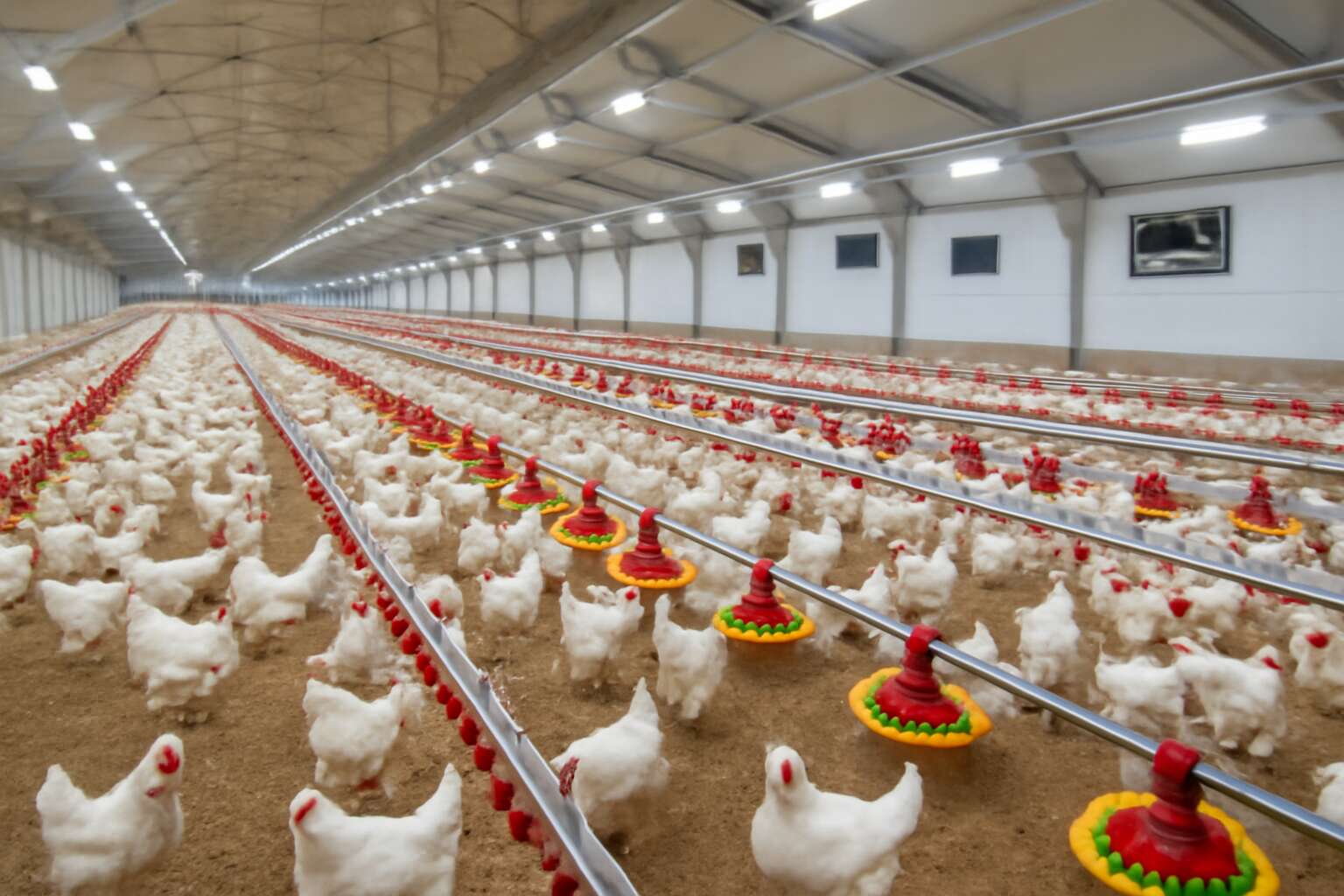
Meat Chicken Production Foundations
breed-and-strain-selection – Breed and strain selection for broiler production
Across South Africa, the quickest route from chick to marketable roast is paved by smart breed-and-strain selection. For chicken farming for meat, the right lines can shave up to seven days off the grow-out, boosting yield and resilience.
Selection hinges on traits that endure SA’s shifting climates: rapid growth, efficient feed conversion, and steady livability. Farmers lean toward lines with robust health, solid carcass quality, and calm temperaments that handle busy housing.
- Growth rate and feed conversion
- Health resilience and mortality resistance
- Carcass yield and meat quality
- Temperament and ease of management
- Adaptability to housing and climate
Blending lines to fit a farm’s footprint—from free-range plots to controlled housing—creates a stable supply chain that honours both growers and eaters. The result is a steadier rhythm in chicken farming for meat.
feeding-and-nutrition – Optimal feeding for rapid growth and efficiency
“Feed is the quiet engine of growth,” a seasoned farmer notes. In chicken farming for meat, the foundation of nutrition shapes both speed and resilience, translating into birds that reach market weight with fewer hiccups and less stress on the flock.
Foundations rest on balanced energy and protein, with digestible amino acids guiding muscle development. Pelleted feeds support uniform intake, while clean water and stable vitamins keep the gut thriving through heat and bustle. The aim is steady, efficient conversion without tipping the birds into fuel-deficiency or excess fat.
- Energy density and amino acid balance
- Digestibility and pellet quality
- Micronutrient stability
- Water quality and hygiene
Across South Africa’s landscape, these elements weave a resilient supply chain that underpins consistent meat production, pairing growers’ stewardship with local consumers’ expectations.
brooding-and-chick-management – Brooding and early chick management
The first 48 hours set a bird’s trajectory; temperature is not luxury but lifeblood. In brooding, warmth, steady humidity, and gentle light cradle fragile life while nutrition begins in spirit as well as seed. Across South Africa’s diverse profiles, early chick comfort translates into steadier growth and calmer flocks.
Key brooding practices include:
- Stable microclimate with even heat, controlled ventilation, and dry litter
- Constant access to clean water and a readily available starter feed
- Early vaccination and rigorous biosecurity to build resilience
- Continual observation of chick activity, droppings, and energy to catch issues early
These small steps ripple through the season, elevating chicken farming for meat to an art.
growth-milestones-and-performance – Growth milestones and performance targets
Growth milestones are the heartbeat of productive chicken farming for meat. Across South Africa, disciplined timing—weight gain, uniformity, and feed conversion—transforms ambition into arithmetic. When flocks move in lockstep toward market weight, the entire operation hums with confidence and purpose!
- Early growth window (days 7–14): rapid feathering, stabilized appetite, and robust gut health set the tone for uniform development.
- Mid-growth window (days 21–28): tracking weight gain and flock uniformity flags drift before it compounds, keeping performance tight.
- Finish window (days 35–42): achieving market weight with favorable feed conversion and minimal variance locks in profitability.
These milestones anchor performance, guiding assessment and investment decisions while keeping the narrative of chicken farming for meat vibrant and compelling throughout the South African landscape.
starter-nutrition-mistakes – Common mistakes in starter feeds and nutrition
In chicken farming for meat, the first bite writes the story of the flock. “The first bite writes the future,” a line I keep near the hatch—because in South Africa’s sheds, starter nutrition is the pale flame that lights growth. The wrong starter can haunt the rest of the cycle, turning vitality into vulnerability.
- Underestimating energy density and leaving a void in appetite
- Imbalanced amino acids due to low-protein starter
- Inconsistent particle size that confuses tiny guts
- Poor water quality or access that dulls intake
The shadows of the hatchery recede as the flock presses forward, yet the lore of starter nutrition lingers—an unseen hinge that demands respect. We witness the quiet choreography of feed, water, and the shy, hungry stomachs—where mistakes in the starter phase cast long shadows on the finishing weight and uniformity.
Housing and Environment for Efficient Meat Chicken Production
housing-design-and-layout – Housing design and layout for broilers
In a broiler house, the simple math of air, light, and litter decides outcomes! “The shed is the third partner in growth,” a veteran farmhand likes to say, and the statement sticks—proper housing design and layout can trim heat stress and boost performance in chicken farming for meat.
Key elements of housing design and layout for broilers include:
- Ventilation that balances fresh air with stable temperatures
- Traffic-efficient layouts that reduce bird disturbance
- Easy-to-clean surfaces and adaptable litter management
When these principles are in place, environments become a support system rather than a constraint, helping houses stay productive under South Africa’s variable climates.
ventilation-and-air-quality – Ventilation and air quality management
Air is the unsung engine of chicken farming for meat. In South Africa’s heat and humidity, the right ventilation keeps birds comfortable and appetite steady. When the shed breathes in a balanced rhythm, heat stress drops and growth improves—the quiet boost behind every flock. The house becomes a partner that never tires.
Ventilation-and-air-quality management is more than fans and vents. It tracks temperature, humidity, and particulates to keep air stable and clean. The following elements carry the weight of healthy air in chicken farming for meat:
- Balanced airflow patterns that avoid hot pockets
- Humidity control to prevent damp litter and ammonia buildup
- Reliable sensors and alarms for real-time conditions
- Regular maintenance to keep fans, filters, and vents clear
With air-quality guardians in place, the environment becomes a stage where birds perform. Even as South Africa’s weather swings, the shed keeps its breath steady, supporting growth in chicken farming for meat.
temperature-humidity-lighting – Temperature, humidity, and lighting strategies
Across South Africa, a well-tuned climate can lift growth efficiency by 3 to 5 percentage points. The interior climate is the quiet star of poultry houses. Minor shifts in temperature can alter appetite and growth trajectory; the better the temp, the brighter the flock’s performance and the less energy wasted on heat stress.
Temperature, humidity, and lighting shape a house where birds perform with grace.
- A stable day-night rhythm keeps stress at bay
- Humidity balance preserves litter health and ammonia control
- Lighting strategies honor circadian rhythms and feeding cycles
When the house breathes in harmony, even a fickle South African climate turns into a supportive partner for growth in chicken farming for meat.
litter-management-and-biosecurity – Litter management and biosecurity basics
Inside a well-tuned broiler house, the quiet rhythm of litter and airflow powers growth. When litter stays dry and evenly distributed, ammonia recedes and birds stay comfortable—steady gains, essential to chicken farming for meat.
- Litter health reflects the house microclimate and consistency of care.
- Biosecurity is a culture woven into every movement, from boots to equipment.
- Ongoing monitoring and records illuminate subtle shifts before they become problems.
In South Africa’s diverse climate, good litter management and robust biosecurity become the quiet backbone of efficient meat production, supporting steady performance without drama, and keeping the flock resilient.
space-density-and-stocking – Space allocation and stocking density
In a well-tuned broiler house, the floor becomes a ledger of potential—space allocation and stocking density can tip growth from ordinary to exceptional. Too little room stacks stress and dampens feed efficiency; give them breathing space, and you’ll see calmer birds and steadier gains across the flock. In South Africa’s variable climate, the balance shifts with season and house design, so adjust density to maintain a microclimate that favors comfort.
Key considerations drive the layout:
- Bird age and growth phase dictate the target density to keep airways open and heat exchange efficient.
- Feeder and drinker placement should be uniform to prevent competition and ensure even consumption.
- Ventilation and litter management must align with density to avoid hotspots and ammonia buildup.
When done right, space becomes a silent partner in chicken farming for meat—safeguarding performance without drama while keeping the flock resilient through SA’s seasons.
Health, Welfare, and Disease Prevention in Meat Chickens
vaccination-programs – Vaccination programs and disease prevention
In chicken farming for meat, disease can erode margins faster than feed prices. Vaccination programs and disease prevention are the frontline shield, especially on South African farms facing variable climate and regional outbreaks. Healthy birds mean better welfare and more consistent meat quality.
Vaccination programs curb common maladies that dim performance and elevate mortality. To support chicken farming for meat, consider these pillars:
- Integrated vaccination programs and meticulous record-keeping
- Regular veterinary oversight and disciplined biosecurity
- Hygienic litter, clean water, and controlled bird movements
A coherent health strategy blends vaccine timing, biosecurity, and welfare considerations to sustain flock health. This approach helps reduce disease pressure and supports steady throughput in South Africa’s dynamic market.
nutrition-related-health-management – Nutrition-related health management
In chicken farming for meat, nutrition-related-health-management is a frontline of health, welfare, and disease prevention. A balanced diet supports gut integrity, immune resilience, and steady growth in broilers. In South Africa’s variable climate, small shifts in amino acids, calcium, and trace minerals can tilt margins—and bird welfare—toward the favorable side. Nutrition that respects growth curves, water quality, and thermal stress keeps birds robust and helps keep disease pressure at bay!
- Balanced energy-to-protein ratio to fuel lean growth without metabolic strain.
- Micronutrient completeness (vitamins and minerals) for bone strength and immune function.
- Gut-health strategies (prebiotics/probiotics) and clean water to support nutrient uptake.
- Consistent feed quality and smooth dietary transitions to minimize digestive upset.
Ultimately, nutrition-driven health and welfare become the quiet backbone that shapes disease prevention in chicken farming for meat.
disease-detection-and-early-warnings – Common diseases and early warning signs
Across South Africa’s commercial sheds, early disease detection can turn a looming loss into a survivable outcome. In chicken farming for meat, vigilance is the quiet guardian—where a single day’s delay can widen a gap between thriving birds and costly culls!
Common diseases share a whisper before they shout. Watch for these early warning signs:
- Coughing or wheezing
- Ruffled feathers or huddling
- Sudden drop in feed or water intake
- Discharge from eyes or nose
- Lameness or swelling of legs
Regular flock-monitoring, prompt veterinary input, and clean stockmanship keep the health margin narrow and humane. In this way, the welfare of birds and the economics of chicken farming for meat stay in balance.
welfare-and-humane-handling – Welfare considerations and humane handling
In South Africa, humane handling isn’t a bonus—it’s a performance metric. In chicken farming for meat, the quickest route from a healthy flock to steady earnings is care-first practice. “Comfort drives conversion,” as one seasoned vet notes, and the evidence grows louder with every well-handled day.
Health begins with daily observation, calm handling, and clean facilities that minimize stress-induced disease risk. Routine checks, vaccination compliance, and prompt veterinary input keep the health margin narrow and humane.
- Gentle handling and low-stress catching
- Quiet, clean transport and proper stocking
- Timely treatment and humane euthanasia when necessary
Ultimately, robust welfare and disease-prevention schemes hinge on staff training, clean stockmanship, and a culture that values birds as sentient beings. When welfare is woven into daily routines, the health of the flock and the economics of production stay resilient.
biosecurity-protocols-on-farm – Biosecurity protocols on the farm
In South Africa, disease pressure can spike quickly, and farms that tighten biosecurity cut losses by up to 30%. Strong health hinges on proactive observation, calm handling, and fortified biosecurity protocols on the farm. Health and welfare dance together, guiding every flock toward reliable production.
- Controlled access and footwear changes to avoid cross-contamination
- Sanitized equipment and clean transport between houses
- Dedicated clothing, hygiene stations, and visitor logs
- Prompt veterinary input and vaccination updates as needed
Daily checks, calm handling, and timely veterinary input keep the health margin narrow and humane. For chicken farming for meat, biosecurity protocols on the farm are the backbone of steady performance, weaving welfare into every barn and reducing risk across the flock.
Breeding, Genetics, and Growth Performance
broiler-breed-selection – Choosing broiler breeds and lines for performance
Genetics set the finish line before the starter gun even fires. In broiler programs, a smart choice of breed and line can trim grow-out time, boost feed efficiency, and shrug off seasonal stresses—crucial in South Africa’s mixed farming landscape. When you pick birds with the right growth curve and muscle deposition, you’re not chasing pounds alone; you’re shaping batch-to-batch uniformity—the quiet backbone of chicken farming for meat.
Key breeding levers include growth rate, feed efficiency, and resilience. Consider these selection criteria:
- Growth rate, final weight, and uniformity
- Feed conversion ratio and steady daily gain
- Robust hatchability and chick vitality
- Disease resilience and environmental robustness
Ultimately, genetics and growth performance are not sorcery but a carefully balanced equation of genetics, management, and context. The right broiler line stays productive under SA barn conditions, delivering consistent performance without turning feed into a black hole.
growth-metrics-and-feed-efficiency – Growth metrics and feed efficiency indicators
Breeding choices carve the finish line before the coop door swings open. In chicken farming for meat, growth metrics and feed efficiency aren’t just numbers—they’re weather forecasts for your flock under South Africa’s diverse landscapes. Growth rate sets the pace to market weight; final weight and uniformity lock in batch consistency. When hatchability and chick vitality stay high, you’re stacking the deck for reliable performance from day one.
Core indicators to monitor in the flock include:
- Growth rate and final weight targets
- Feed conversion ratio and steady daily gain
- Hatchability and chick vitality
- Disease resilience and environmental robustness
Balance genetics, management, and context and the right line stays productive under SA barn conditions, delivering consistent performance without turning feed into a black hole.
genetics-and-crossbreeding-strategies – Genetics and crossbreeding strategies
Genetics acts as the compass in chicken farming for meat. Crossbreeding strategies turn climate, flooring, and feed into an orchestra rather than a hurdle. A sharp pairing of lines can lift growth pace, tighten final weights, and sharpen feed conversion without draining vigor. The right cross brings heterosis, tightening uniformity and resilience in one deliciously efficient stroke.
- Targeted growth rate and uniformity
- Hatchability and chick vitality preservation
- Environmental resilience and disease robustness
The strategy centers on balancing genetics with barn management, choosing lines that perform gracefully in SA climates and housing, delivering consistent, predictable outcomes.
mortality-reduction-strategies – Mortality reduction and culling decisions
In South Africa’s brisk broiler scene, even a one-point shift in flock mortality can erase thousands of rand from a single cycle.
Mortality reduction in chicken farming for meat sits at the intersection of genetics and barn management. Favor lines with inherent survivability and pair them with careful, data-informed culling—where the aim is to minimize suffering while protecting the flock’s economic heartbeat in SA climates and housing.
- Genetic resilience and disease robustness inform which birds remain in the flock.
- Continuous health surveillance and performance data guide culling thresholds.
- Environment, handling, and transport quality influence observed mortality patterns.
- Transparent mortality accounting supports consistent, market-aligned outcomes.
The balance is humane, profitable, and, dare I say, stylishly methodical.
record-keeping-for-performance – Record keeping for performance tracking
Breeding and genetics set the baseline for a flock’s performance. In chicken farming for meat, the focus is on lines with inherent survivability and predictable growth curves, paired with disciplined data-driven culling when needed. Clear performance records turn genetic potential into real income in SA climates and housing conditions.
Record keeping for performance tracking is the backbone of improvement. Precision metrics reveal where genetics meet the environment and where waste falls away. A structured log should cover standard weights, days to target weight, feed intake, and mortality patterns, with health events flagged promptly.
- Body weight at regular intervals
- Feed intake and feed conversion ratio
- Mortality and culling details
- Health events and vaccination status
Long-term genetics must align with growth performance targets, integrating environmental data to refine crossbreeding strategies. Transparent data fosters accountability, while the right records inspire trust among suppliers and customers in the market.
Operations, Economics, and Compliance
production-costs-and-budgeting – Cost of production and budgeting
Operations in chicken farming for meat move like a well-tuned orchestra. Day-old chicks to market birds follow a precise rhythm: brooder warmth, clean housing, timely feed transitions, and vigilant health checks that keep the flock on course amid shifting weather and demand.
Economics and budgeting form the ballast under that rhythm. For chicken farming for meat, the cost of production turns on feed, energy, housing upkeep, and labor—the big levers shaping a full grow-out cycle.
- Feed and nutrition inputs
- Energy and utilities
- Labor and training
- Maintenance and equipment depreciation
With careful forecasting, margins emerge in steady cycles rather than sudden shocks, aligning with South Africa’s market cadence.
Compliance and governance anchor the enterprise in safe, sustainable practice. Record-keeping for traceability, biosecurity, and welfare standards guard product quality and public trust, shaping a resilient path from hatchery to processing.
market-demand-and-pricing – Market demand and pricing for meat chickens
South Africa’s chicken market grew 6% last year, moving with drum-tight precision. In chicken farming for meat, operations hinge on brooding warmth, clean housing, timely feed transitions, and processing schedules that keep birds on a steady rhythm from hatchery to market.
Economics and demand drive pricing. Margins ride demand cycles, retailer contracts, and feed-cost dynamics, turning forecasts into steady cycles rather than shocks.
- Domestic consumption demand cycles
- Holiday and school-term fluctuations
- Export windows and currency effects
- Feed-price pass-through and price sensitivity
Compliance anchors the enterprise with traceability, biosecurity, and welfare standards. Clear records defend product quality, public trust, and price stability from hatchery to processing.
sustainability-and-waste-management – Sustainability practices and waste management
Last year, SA’s chicken market grew 6%, a pace that tests operations from hatchery to processor. In chicken farming for meat, operations hinge on a steady rhythm from hatch to market: brooding warmth, clean housing, precise feed transitions, and tight processing schedules that keep birds moving. In South Africa, operational discipline meets market demands, where producers balance throughput with welfare and consistent quality.
Sustainability and waste management are woven into daily practice:
- Energy-efficient climate control and lighting
- Water reuse, capture, and conservation
- Litter-to-compost and responsible waste handling
Economics drive pricing as feed costs and currency cycles shape margins, while compliance anchors the enterprise with traceability, welfare standards, and biosecurity—clear records from hatchery to processing defend quality and stabilize price expectations in a dynamic market.
regulatory-standards-and-animal-welfare – Regulatory standards and animal welfare requirements
Last year SA’s chicken market grew 6%, and in chicken farming for meat that growth is felt in every shift. I’ve watched operations hinge on a single rhythm—from hatch to market—where temperature, clean housing, feed transitions, and processing cadence all play catch-up with the timeline. It’s clockwork—and surprisingly entertaining.
Economics drive margins as feed costs swing with currency cycles, even as demand holds steady. In pragmatic terms, a strong rand helps grains stay affordable, while every price uptick tightens the plan. We ship robust performance with cost controls that keep profitability from wobbling at the scales.
Compliance and welfare aren’t afterthoughts; they are the operating manual. Standards demand traceability, welfare checks, and biosecurity that travels with every crate and coop visit. I remind teams that regulatory compliance protects brand trust and birds alike—clear records, audits, and transparent practice are the backbone of responsible production.
traceability-and-certifications – Traceability, record keeping, and certifications
Last year SA’s chicken market grew 6%, and in chicken farming for meat that growth shows in every shift. From hatch to market, temperature, clean housing, and feed transitions must stay in rhythm with growth—an exacting, almost theatrical clockwork!
Economics shape margins as feed costs ride currency cycles. A stronger rand helps grains stay affordable; price upticks tighten plans. We chase robust performance through cost controls and disciplined procurement to keep profitability steady at scale.
Compliance and welfare are the operating manual. Traceability, record keeping, and certifications protect brand trust and birds alike. Audits travel with every crate and coop visit, forming a transparent trail that underpins responsible production.
- Batch traceability IDs linked to flock and location
- Digital records of feed, vaccination, and movement
- Certifications like HACCP, GLOBALG.A.P., ISO-9001 maintained

0 Comments